The domus of Itálica
At the height of Hadrian’s time, large houses for the most important and wealthy families of the area were built in the new city.
These houses followed the traditional structure of the Roman house, with its inner courtyards. Remains of several of them have survived.
House of the Birds
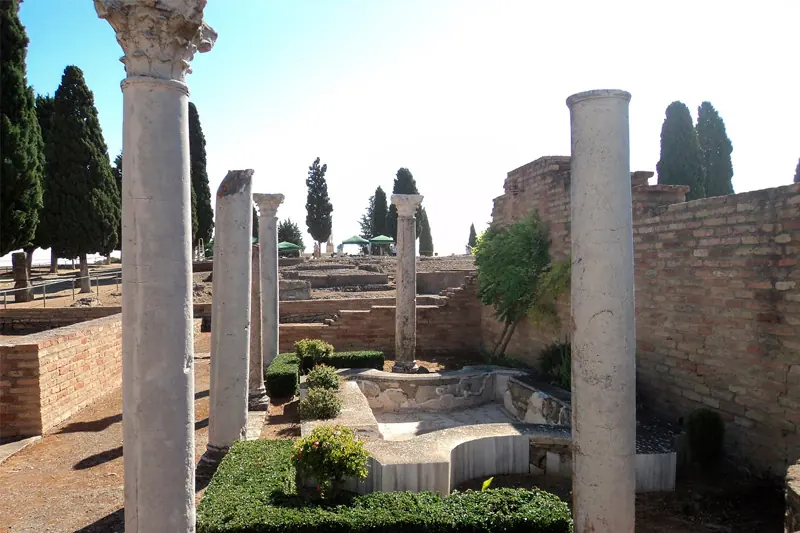
It was built in Hadrian’s time. It was one of the mansions intended exclusively for the notables of Itálica, with a privileged location, high-quality construction and luxurious finishes. It has a cistern beneath the peristyle, where rainwater was stored, and several rooms and passageways around the peristyle that made the daily tasks of the master of the house easier. One of them is paved with the mosaic that gives the house its name.
Video: Eduardo Barragán · italicaromana.blogspot.com
House of the Planetarium
It takes its name from its mosaics, which depict the planetary deities that, in the Roman calendar, gave their names to each day of the week. It was also one of the mansions of the notables of Itálica.
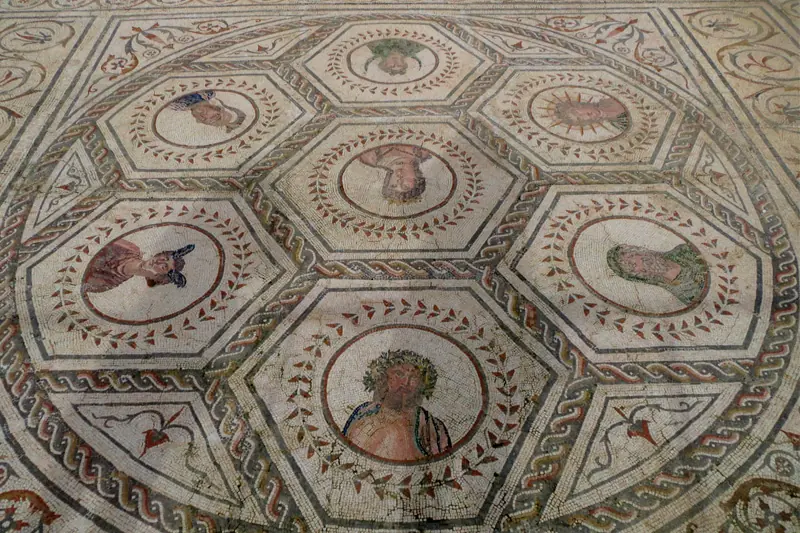
Video: Eduardo Barragán · italicaromana.blogspot.com
House of Hylas
Like the House of the Rhodian Patio, it is a luxurious dwelling that has not yet been fully excavated. Its name comes from one of its mosaics, which depicts the abduction of Hylas by the nymphs and is now in the Archaeological Museum of Seville.

House of the Exedra
An exedra is a semicircular structure, usually on a platform, that was used for conversation or philosophical debate. Given its size – 4,000 square metres – it may be a dwelling or a semi-public building, such as the headquarters of an association (collegium).
The rooms of the residential area are arranged around a porticoed courtyard or peristyle, with thick pillars and a central pool with curved shapes. Notable features are the dining room (triclinium) and some latrines decorated with mosaics.

House of the Rhodian Patio
Another luxurious dwelling full of mosaics, in this case badly damaged by time, with many unknowns about its layout.
House of Neptune
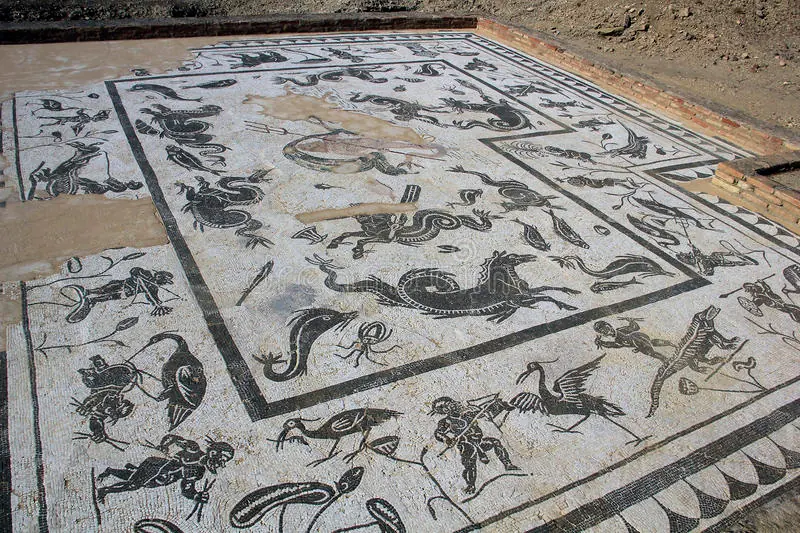
It had its own baths and several important mosaics, above all that of Neptune, surrounded by sea creatures. It was in use from Hadrian’s time until this area of the city was abandoned. It occupies a block of 6,000 square metres.